As published in The XPat Journal, Spring 2015. www.xpat.nl/xpat-journal
Is there a monster living under your bed?
What all U.S. expats need to know
By Charles Rubenacker
If you are an expatriated American, you might want to keep your lights on. Those dust bunnies could be more than meets the eye.
First and foremost, if you are an American expatriate living in the Netherlands – or many other countries – you absolutely need to report your income to the United States government, via a ‘tax return’ (Form 1040), regardless of how long you have lived abroad. Along with that obligation comes another surprise to many expats. If you reside outside the U.S. and have foreign accounts or investments that total more than $200,000 at the end of the tax year, or more than $300,000 at any time during the tax year, you are required to file a Form 8938 along with your Form 1040. (Filing status will affect these totals.) Let’s take a closer look at this latter obligation, referred to as ‘FATCA’.
The Foreign Account Tax Compliance Act (FATCA) has been dominating the financial news, both at home and abroad. Why?
FATCA was quietly signed into law in March 2010. The published reason for FATCA’s coming into existence was to target non-compliant U.S. taxpayers with foreign accounts, focusing on U.S. taxpayers that may not have been reporting certain foreign financial accounts and offshore assets. FATCA reaches beyond the individual, however, and has been steadily bringing foreign financial institutions into the scheme, requiring those institutions to report any U.S. taxpayers with a foreign account, and also to report any foreign entity that is substantially owned by a U.S. taxpayer. Although deemed a voluntary program, foreign financial institutions not participating face economic sanctions by the U.S. government for failure to comply. To date, 51 nations have signed disclosure agreements under the Intergovernmental Agreement (IGA) and obtained their Global Intermediary Identification Number (GIIN) from the U.S. Treasury Department. Those 51 nations include the Netherlands.
Under FATCA, to avoid being withheld upon, foreign financial institutions (FFIs) may register with the IRS and agree to report to the IRS certain information about their U.S. accounts, including accounts of certain foreign entities with substantial U.S. owners. (In the Netherlands alone, more than 3,100 institutions have already registered.) FFIs that enter into an agreement with the IRS to report on their account holders may be required to withhold 30% on certain payments to foreign payees, e.g. expats, if such payees do not comply with FATCA. Unless exempt, FFIs that do not both register and agree to report U.S. taxpayer accounts face a 30% withholding tax on certain U.S.-source payments made to those foreign financial institutions.
Also keep in mind that these FATCA requirements are in addition to the long-standing requirement to report your foreign financial accounts on FinCEN Form 114, Report of Foreign Bank and Financial Accounts (FBAR) (formerly TD F 90-22.1).
There are serious penalties for not reporting these financial assets if you must file FATCA Form 8938 and do not do so; you may be subject to harsh penalties: a $10,000 failure-to-file penalty, plus an additional penalty of up to $50,000 for continued failure to file after IRS notification, and a 40-percent penalty on an understatement of tax attributable to non-disclosed assets.
According to the U.S. Treasury Department, “Those required to file an FBAR who fail to properly file a complete and correct FBAR may be subject to a civil penalty not to exceed $10,000 per violation for non-willful violations that are not due to reasonable cause. For willful violations, the penalty may be the greater of $100,000 or 50 percent of the balance in the account at the time of the violation, for each violation.”
Remember, as the final FATCA agreements are signed and FFIs continue to register with the IRS, your foreign financial account information will no longer be a private matter; it will be surrendered to the U.S. Treasury Department.
So keep your lights on. Not complying will awaken the monster under your bed.
Recommended Bedtime Reading:
Foreign Account Tax Compliance Act (FATCA) – Resource Center — http://www.treasury.gov/resource-center/tax policy/treaties/Pages/FATCA.aspx
Summary of FATCA Reporting for U.S. Taxpayers — http://www.irs.gov/Businesses/Corporations/Summary-of-FATCA-Reporting-for-U.S.-Taxpayers
Report of Foreign Bank and Financial Accounts (FBAR) — http://www.irs.gov/Businesses/Small-Businesses-&-Self-Employed/Report-of-Foreign-Bank-and-Financial-Accounts-FBAR

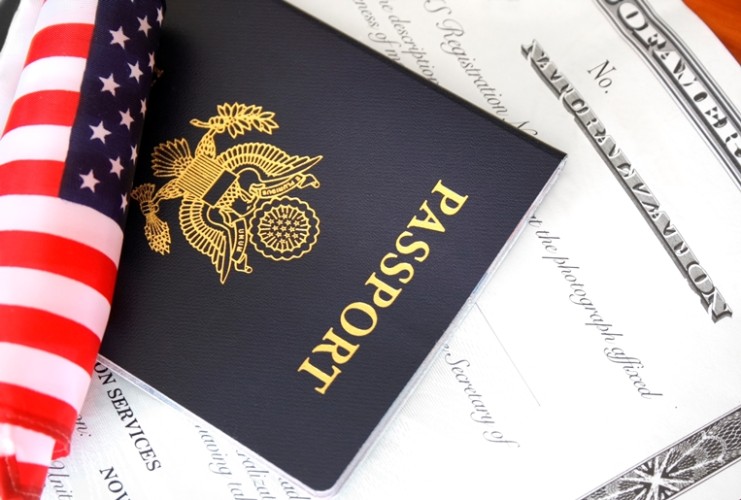 If you have a signed U.S. Passport, you have agreed to the small print inside — regarding U.S. Taxes.